Democratic governor explains endorsement of RFK Jr. for HHS Secretary
 lead image
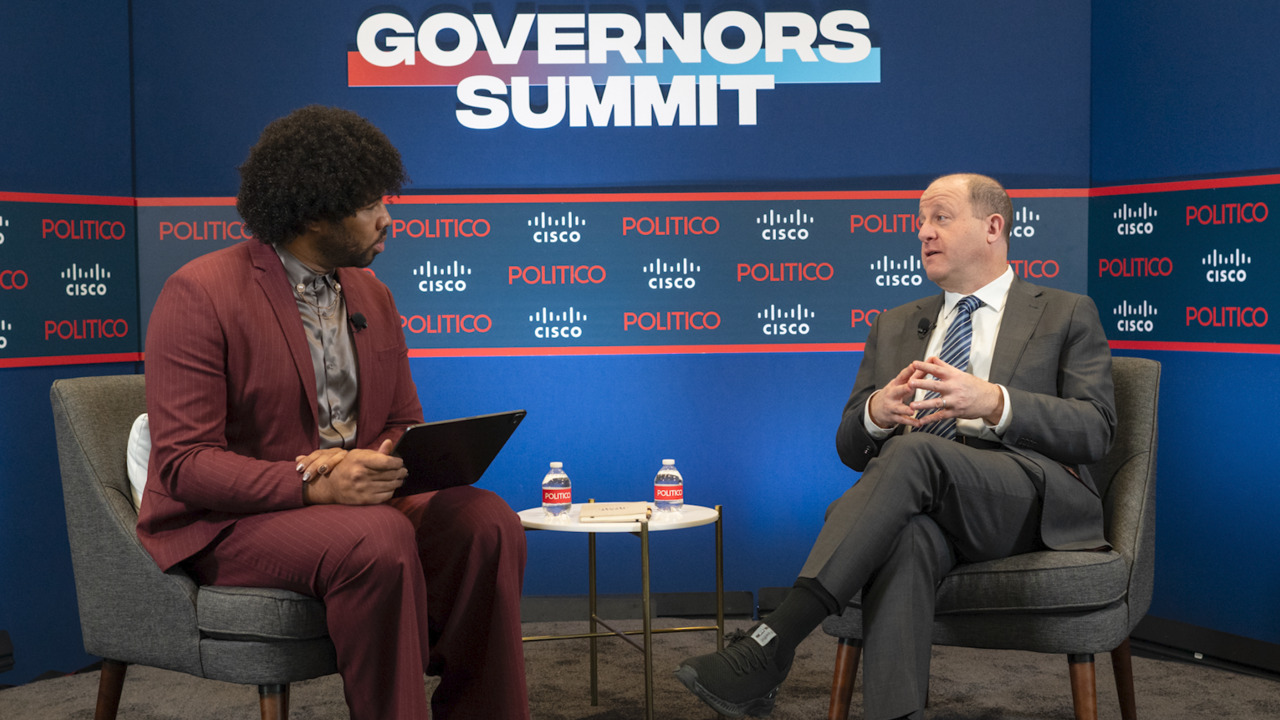
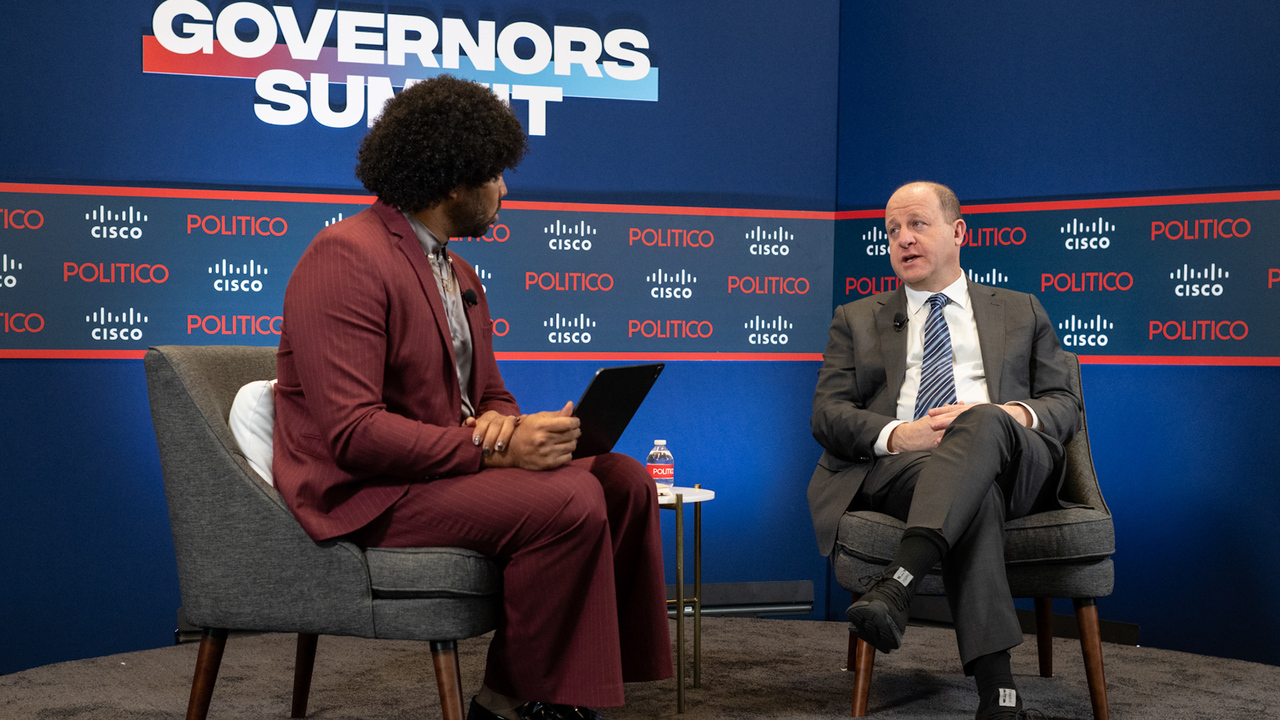
Democratic Kentucky Gov. Andy Beshear wants his party to start talking “like real human beings” and get away from what he called “sanitized” language and messaging.
“We got to talk to people like real human beings,” Beshear told POLITICO’s Elena Schneider at POLITICO’s Governors Summit on Thursday. “We’ve sanitized different language so significantly that, you know, people don’t feel like we’re talking to them.”
Beshear cited a few specific examples of language he thinks has been wrongfully embraced by Democrats, homing in on terms like “substance use disorder” instead of the more colloquial “addiction” or “justice-involved populations” to refer to incarcerated people.
“It’s hard to communicate when you’re not using some normal language,” he said.
Beshear has been one of the most successful red-state Democrats in the Trump era, having won two governor’s races in a state President Donald Trump carried by 30 points in 2024 over then-Vice President Kamala Harris.
“When people believe that you are actually improving their lives, and they see it and they feel it. Now they’ll change the way they vote,” he said.
Beshear also danced around a question about his political future once his second term is up, saying “we’ll see,” and highlighted his role as vice chair of the Democratic Governors Association. Beshear was floated as a possible running-mate for Harris last year, and his state is anticipated to have an open Senate race next year.
“I love this country and I hate to see how divided it is,” he said. “If there is an ability or another opportunity to [fix America’s problems], it’s something I’d consider.”
In his wide-ranging interview, Beshear touched on the floods currently affecting the Bluegrass State, which have killed 14 people, as well as immigration and some federal services that impact Kentuckians, like Medicaid.
In particular, he called out billionaire Trump ally and de-facto head of the Department of Government Efficiency Elon Musk for not understanding how the federal funds DOGE has frozen really work.
“I see Elon Musk’s tech interns or tech bros running around D.C. They may understand AI, but they don’t understand funds like AML,” Beshear said, referring to the Abandoned Mine Land Reclamation Program, which is housed within the Interior Department.
He said DOGE’s effort to freeze funds for the program is specifically halting an effort that would bring clean drinking water to nearly 1,600 homes in two Kentucky counties.
“These actions require that people actually know what they’re doing, that they learn the people that they might hurt,” Beshear said.
Donald Trump isn’t just looking to remake the federal government. He has his sights set on the city of Washington, too.
In his first few weeks in office, the president has moved to drastically alter the fabric of the nation’s capital.
He ordered thousands of Washington-area federal workers to return to the office — some of whom his administration is moving to lay off. He injected himself and his allies onto the board of the John F. Kennedy Center to recast “woke” performing art culture. And the city’s mayor said she has been briefed on a pending executive order on topics like public safety and homeless encampments in the city.
The flurry of actions drives home that Trump has a dark view of his adopted, part-time home — possibly influenced by the fact that more than 90 percent of its residents supported his opponent in the 2024 election. He called the District a city of “filth” and “decay,” an insult reminiscent of ones he has hurled at other major cities he has feuded with like Baltimore or New York.
Trump has cast his departure from Washington in 2021 as a pivot point for the city. He rarely returned to Washington during his four years out of power — with a notable exception being an August 2023 trip from Ronald Reagan Washington National Airport to a D.C. federal court, during which he pleaded not guilty to four counts to overturn the 2020 elections.
It was “very sad driving through Washington, D.C. and seeing the filth and the decay and all of the broken buildings and walls and graffiti,” Trump said on the tarmac just before leaving the D.C. area. “This is not the place that I left. It’s a very sad thing to see.”
D.C. is rebounding from the pandemic, which battered the region’s economy that is supported by in-person work from federal employees, ushered in a since-diminished spike in crime and exacerbated the city’s homelessness crisis.
The president and Congress have the authority to undercut the District’s political machinery by rejecting any bill the local administration puts forward and proposing their own. And Trump’s congressional allies have already moved to disrupt the power balance in the District through legislation introduced earlier this month that could undo a 1970s-era law that allowed the nation’s capital to largely govern itself.
Republicans have made similar threats to undermine the D.C. government during Mayor Muriel Bowser’s decade-long tenure. But they were toothless because of Democratic opposition in Congress or the White House.
Even when Republicans gained control of the House and Senate during Trump’s first term, he didn’t follow through on his threats, including one that would have overridden D.C. governance by temporarily overtaking agencies like the Metropolitan police. Trump also relied heavily on executive orders to go after immigrants from sanctuary cities like D.C., but those were not targeted specifically to his then-home city and were mostly rescinded by former President Joe Biden.
This time, a reenergized Trump armed again with a Republican majority in Congress has said he would tighten his grip on D.C.
The White House did not respond to a request for comment for this article.
If Trump and congressional Republicans dip into city affairs, they would drastically shift the relationship between the Bowser administration and the federal government, which has largely stayed out of local politics in recent years.
About two years ago, Congress stymied local efforts to decrease crime penalties, marking the first time in three decades that Capitol Hill officials have successfully flexed this muscle. Congress has also repeatedly passed a rider blocking commercial sales of recreational marijuana in the District.
Republicans on Capitol Hill have justified the local government takeover by skewering the Bowser administration for a recent surge in crime that they say she has mishandled. Homicides surged during the pandemic to a decades-long zenith of 273 cases in 2023, though this figure dipped by 32 percent in 2024, according to D.C. police data.
“The radically progressive regime of D.C. Mayor Bowser has left our nation’s Capital in crime-ridden shambles,” Rep. Andy Ogles (R-Tenn.), one of the co-sponsors for the latest congressional push to defang D.C.’s government, said in a press release. “Bowser and her corrupt Washington City Council are incapable of managing the city.”

Bowser and the council have grown tougher on crime since Trump’s first term. Last March, as the city reeled from a spate of carjackings and homicides, the local government passed a crime omnibus package that imposed harsher penalties for crimes like retail theft and illegal gun possession.
“We will not tolerate violence and we will not tolerate criminal activity that disrupts our sense of safety and our ability to build thriving neighborhoods,” Bowser said in a statement following the passage of the bill.
Bowser has tried to further soothe Trump and other Republicans by focusing on “shared priorities for the president’s second term,” like bringing the D.C. region’s federal workforce back to underutilized federal buildings and developing more green spaces and infrastructure, she said in December.
Now, as the city attempts to maintain diplomacy with Republicans, the largely Democratic D.C. Council has to get creative to pass their agendas.
Before Republicans took control of Congress and the presidency on Election Day, the city council was about to pass a pair of bills that would have required insurers to study reparations and fully cover vasectomy procedures. Weeks after the GOP assumed control of Congress and the presidency, the council changed the name of the vasectomy bill to the “Insurance Regulation Amendment Act” as part of a preemptive effort to dodge ire from Republicans, who had launched a national crusade against reproductive rights.
“When we had a fight over the revised criminal code, the Council lost control of the messaging,” Council chairman Phil Mendelson told The Washington Post. “Lesson learned. We need to be sensitive to messaging.”
For her part, Bowser still appears optimistic about her relationship with Trump — who she met with at his Mar-a-Lago resort in Florida in December — even as the president further derides her city and leadership.
“I agree with the president-elect on this point,” Bowser said in December. “We want to make our nation’s capital the most beautiful capital in the world.”
The Department of Government Efficiency created its own account on X last November, amassing 4 million followers with a stream of news on contract cancellations and other cuts to the bureaucracy. Elon Musk has posted relentlessly on the social media platform he owns, promoting his own voice on an algorithm he controls.
The Democratic National Committee, meanwhile, started a rapid response account in January with about 121,000 followers, a fraction of DOGE’s reach. And Democrats held traditional rallies outside the USAID and Treasury buildings, where Chuck Schumer, the Senate minority leader, was mocked on late-night TV and by even some within his own party after leading a chant of “We will win!”
It was a halting response by Democrats to a flood of pro-DOGE messaging. And what was worse, according to interviews with more than a dozen Democratic elected officials and strategists, was that they were doing it on the wrong platform — convening a conventional show of resistance for local and national TV cameras, as Schumer did while holding a carton of eggs, while largely leaving unanswered the torrent of MAGA orthodoxy and, in many cases, disinformation online.
In the online war, said Chi Ossé, a Democratic New York City councilman who has built an online following through his short-form, explanatory videos, you “don’t see those folks anywhere.”
“Trump and Republicans have been able to grasp different types of media in how to get their message across that impacts society as a whole, and I do believe that Dem leadership is missing the mark, not only in the election but in our resistance 2.0,” Ossé said. “We need to be active in every medium.”
Instead, in the early days of Trump’s second term, they’re getting swamped. The rapid response account the DNC started in January is a fifth of the size of @RapidResponse47, the Trump White House’s account. Hakeem Jeffries, the House minority leader, has almost a million followers. But Musk, who has posted hundreds of times over the last month, has more than 217 million followers. Some Democratic groups, like MoveOn.Org and Human Rights Campaign, are posting far less on X — if not leaving the site completely for Bluesky, a left-leaning version of X with far fewer users and nowhere the same audience reach.
Conservative personalities hold five of the top 10 podcasts on Spotify, while for liberals, only the New York Times’ columnist Ezra Klein cracks that list. When Ben Shapiro, the controversial conservative podcaster, posts on Facebook, 9.4 million people are following along, compared to about 1.8 million for Rep. Alexandria Ocasio-Cortez (D-N.Y.).
Three months after their losses in the November elections — and now three weeks into Donald Trump’s presidency — some Democrats concede they are losing an asymmetrical battle with the president and his MAGA allies, where Trump and Musk have dominated online spaces over the last month. And there is no consensus among them about how to fix their rapid response problems or who’s to blame, these Democrats said.
“Republicans are running circles around Democrats for how to connect to the culture today,” said John Della Volpe, director of Harvard University’s youth poll and an expert on Gen Z. “People are still asking me in these post-election meetings, ‘Who is Theo Von?’ Even if they had the best message, you can’t connect if you’re not part of modern American culture, if you’re not injecting yourself into these spaces where people already are.”
Democrats’ weakness in reaching voters outside traditional channels — TikTok, not MSNBC; YouTube, not national newspapers — isn’t new. One post-election analysis from Navigator Research, a Democratic research project, found that a majority of “swing voters” and new Trump voters last year got their news primarily from social media and alternative sources, like podcasts. Broadcast and cable news were far less popular amongst those two groups, the research found, while half of Kamala Harris’ voters got their news from broadcast TV outlets.
“Republicans’ ability to speak into the ecosystem is sharper, more precise and Democrats are behind in that,” said Dan Sena, a longtime Democratic strategist and former executive director of the Democratic Congressional Campaign Committee. Sena, like other Democrats, noted that Republicans benefit from a broader media ecosystem that amplifies their message, where a story can travel from a Republican influencer’s video to Musk’s X feed to Joe Rogan’s podcast to Fox News, reaching millions of viewers along the way.
“There is a fight for the attention economy, and today the Republicans are winning. No doubt,” he added.
Sena warned that the fix won’t come from the Democratic National Committee, DCCC or other affiliated party arms, therefore, it’s “not even a fix we can expect right now,” he said. Instead, “that’s going to come through our candidates pushing back, getting their own internal communications sharper as we head into 2026.”
“The leadership vacuum IRL is causing a messaging vacuum online,” said Kyle Tharp, a progressive researcher who tracks digital political trends through his substack, Chaotic Era. “Even though there are some bright spots, Democrats are still getting steamrolled online and there’s not a lot they can do about it because there’s not a single coordinating body or person to push an offensive message.”
“I don’t know how fixable that problem is right now,” Tharp added.
There are some exceptions among Democrats who are piercing through, including Ocasio-Cortez, who regularly goes viral with her Instagram live videos and posts on X. Rep. Maxwell Frost (D-Fla.), the first Gen Z member of Congress, frequently spars with Republicans online, as do Sens. Chris Murphy (D-Conn.) and Brian Schatz (D-Hawaii).
Some Democrats are sharpening their language, which can often generate more online attention, though not without risk of turning off some voters. On Wednesday, Rep. Robert Garcia (D-Calif.) posted a clip of himself on CNN calling Musk “a dick” because “what the American public wants is for us to actually bring weapons to this bar fight.”
“They should be creating bait of their own. Be more aggressive, be more outlandish,” said Tim Miller, a former GOP strategist who now hosts a podcast on The Bulwark, a site founded by anti-Trump Republicans. “I think they should be doing 700X of what they’re doing, in terms of output, volume, platforms, speed.”
And there’s also some evidence that at least some Democrats have gotten the message. Progressive influencer Brian Tyler Cohen spoke to Senate and House members at their respective meetings this week about how to engage on social media, according to two people familiar with the meetings and granted anonymity to discuss private events. Jeffries appeared on Cohen’s show and Jon Stewart’s podcast earlier this month.
Schumer, after publication, said in a prepared statement Sunday, “We are fighting on every front — from pushing back on MAGA and DOGE’s thoughtless and devastating policies, to rising inflation, including the price of eggs, which directly impacts American families every single day.”
Nine Democratic senators joined Pod Save America for a series of live interviews last week, beaming in from Schumer’s office. Sens. Elizabeth Warren (D-Mass.) and Schatz appeared on Adam Mockler’s YouTube show in recent weeks. Sen. Cory Booker (D-N.J.) popped up on The David Pakman Show, another YouTube show for progressives. The DNC hired the staffers behind the @KamalaHQ X account to run its new @FactPostNews efforts, which can be found on X, BlueSky, Threads, Instagram and Facebook.
But even Democrats acknowledge those efforts are the exception in their party. Thirty-five-year-old Texas state Rep. James Talarico, who like Ossé has used social media to push through his political priorities, called the national Democratic response to Trump, “too slow and too tepid and not meeting the moment.”
“Just like the printing press or the radio or the TV, social media is now how we communicate and if we’re not adapting to this new environment, we’re not going to get heard,” Talarico said. “If our party doesn’t keep up, we’re going to be left behind.”
CORRECTION: A previous version of this report misstated when Hakeem Jeffries appeared on Brian Tyler Cohen’s show and Jon Stewart’s podcast.
Every week political cartoonists throughout the country and across the political spectrum apply their ink-stained skills to capture the foibles, memes, hypocrisies and other head-slapping events in the world of politics. The fruits of these labors are hundreds of cartoons that entertain and enrage readers of all political stripes. Here’s an offering of the best of this week’s crop, picked fresh off the Toonosphere. Edited by Matt Wuerker.
A leading teachers’ union and allied labor groups sued three Trump administration agencies on Monday to halt billionaire Elon Musk’s government-efficiency operation from accessing sensitive federal data.
The American Federation of Teachers, the National Active and Retired Federal Employees Association, the International Association of Machinists and Aerospace Workers, and the National Federation of Federal Employees filed suit in a Maryland federal court, alleging that the Treasury Department has disclosed the contents of a government system that includes records on Americans’ tax refunds and Social Security benefits.
The labor groups further accused the Education Department of improperly disclosing information in its national student loan data system that carries sensitive financial records for nearly 43 million borrowers. And they accuse the federal Office of Personnel Management of allowing Musk’s representatives access to information on millions of current and former federal employees, plus federal job applicants.
The legal complaint backed by the nonprofit advocacy group Protect Democracy and the Munger, Tolles & Olson law firm amounts to yet another challenge to the sweeping access and authority granted since Trump’s inauguration to the so-called Department of Government Efficiency.
“Steamrolling into sensitive government record systems threatens to upend how these critical systems are maintained and compromises the safety and security of personal identifying information for Americans all across the country,” the lawsuit alleged.
“It also violates federal law,” said the lawsuit, which alleges the government disclosures to Musk’s operation break the federal Privacy Act of 1974.
Representatives for the Education Department, Treasury Department, and Office of Personnel Management did not immediately respond to requests for comment.
The complaint asks a federal judge to prohibit the government agencies from allowing DOGE representatives further access to sensitive information — and requires the Trump administration “to retrieve or ensure the destruction of any copies of any records that were unlawfully disclosed” among other requests.
“Elon Musk and his minions are stealing Americans’ private personal and financial data in one of the biggest data hacks in U.S. history,” AFT President Randi Weingarten said in a statement on Monday. “I suspect no one who voted for Donald Trump thought he would allow Musk permission to invade their privacy. This is a breach of our fundamental freedoms.”
Musk’s DOGE in the past few weeks had begun a wholesale effort to cut parts of the federal government, including USAID, the Consumer Financial Protection Bureau, and Education Department.
“Government agencies are not private entities that billionaires can simply buy and rummage through,” IAM Union International President Brian Bryant said in a statement. “Congressional oversight, advocacy and voting are how we make government work for us, not reckless takeovers that put the personal data of millions of Americans into the hands of unqualified, unvetted political operatives.”
Donald Trump’s move to rapidly eradicate diversity efforts from the federal government marks the culmination of a widespread conservative backlash to the antiracism movement of 2020.
Five years ago, as “END RACISM” was emblazoned on professional football fields and Uncle Ben and Aunt Jemima caricatures disappeared from grocery shelves, a growing number of voters bristled at what they saw as a performative attack that went far beyond that police brutality symbolized by the killing of George Floyd. As hiring managers across the country embraced diversity, equity and inclusion programs, Republicans waged a culture war over the “woke agenda” and rode it to victory, from local school board contests to sweeping Trump back into the White House.
The politics of race has changed in just a few years. And now Trump’s capitalizing on it.
“What a storytelling win for Trump,” said DeRay McKesson, a progressive activist who rose to prominence during the Black Lives Matter protests in Ferguson, Missouri. “That is a failure of storytelling on the left and a huge win on the right.”
On his first day in office as part of a conservative wishlist outlined in Project 2025to assert more control over the federal workforce, Trump declared DEI programs discriminatory and ordered them to be uprooted from government agencies and programs.
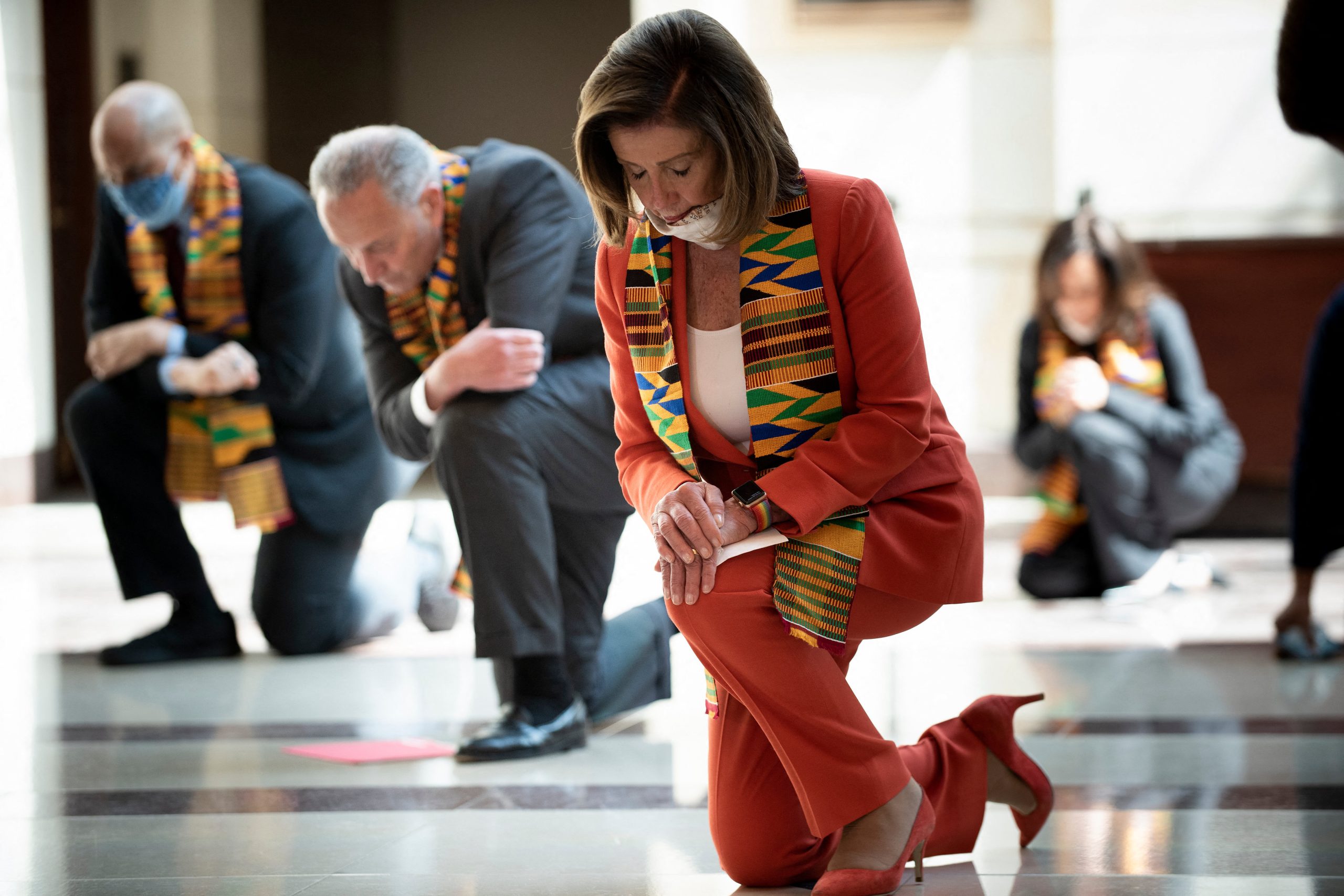
Five years ago, it was Democrats who were leading the pro-diversity push, even taking part in photo ops donning kente cloths and kneeling inside the U.S. Capitol to show solidarity with Black Lives Matter protests. Now it finds itself without a cogent plan on how to best stop the president’s DEI blowback at this moment — or how to win back those very voters they needed to stop him.

Trump campaigned on his first-term economy that had record low unemployment for Black and Latino Americans — drawing historically high levels of support among these voters last fall. Now, the first few months of his presidency could be marked by putting Black and brown federal employees out of work.
Hundreds of workers across federal agencies have already been placed on paid administrative leave following the order, including workers at the Department of Education who took part in a voluntary “Diversity Change Agent Program” that was established during Trump’s first term. The president fired high-ranking Democratsat bipartisan agencies responsible for enforcing anti-discrimination laws, raising questions about the policing of discrimination in the private sector.
This week a conservative nonprofit launched a website posting names and photos of employees on its “DEI watch list.” The American Accountability Foundation said it started the website to highlight the prevalence of such roles in government jobs, but critics say it is a means of inviting online harassment to private citizens.
Both the White House and the Office of Management and Budget declined to disclose how many people will be affected by Trump’s executive order to expel DEI from the federal government.
“President Trump campaigned on ending the scourge of DEI from our federal government and returning America to a merit-based society where people are hired based on their skills, not for the color of their skin,” said White House press secretary Karoline Leavitt. “This is another win for Americans of all races, religions, and creeds. Promises made, promises kept. It should come as no surprise.”
Diversity programs have been around for decades, but Trump has made them a frequent target of criticism. He blamed “woke generals” last year for the chaotic and deadly U.S. withdrawal from Afghanistan in 2021, repeatedly referred to Vice President Kamala Harris, his Democratic opponent and the daughter of Indian and Jamaican immigrants, as a “DEI-hire,” and even implied without evidence that diversity policies played a role in the worst airline crash in two decades and on air traffic controllers who didn’t have the “highest level of intelligence.”
“I just think there’s this sort of white male grievance they’re catering to,” said Debra D’Agostino, a Washington-based employment attorney who has been fielding calls from workers affected by the DEI-related purges from government posts.
The administration’s order threatens to obliterate decades of efforts to reduce bias in hiring for federal government roles aimed at having a workforce that better represents the nation it serves.
These goals — once widely accepted without major controversy — weren’t just about achieving a diverse workforce. Supporters of these types of initiatives say they were about tapping underrepresented talent pools for critical roles and to help administer programs, ranging from helping prospective minority homeowners secure government-backed loans to securing roles in cybersecurity to contributing to STEM fields at the National Academy of Sciences.
But as the post-2020 pendulum swung the other way, conservative activists won early electoral victories. Republican Gov. Glenn Youngkin credited his upset victory in blue-leaning Virginia to grievances over how elite high schools altered their admissions process in efforts to make it more equitable. Long before it was clear Trump would mount a political comeback, conservative Florida Gov. Ron DeSantis banned the teaching of diversity subjects in public schools. And grassroots groups like Moms For Liberty and Citizens Defending Freedom popped up across the country to win school board elections to alter curricula.

They also won key legal victories — in some cases aided by a Supreme Court that has a six-seat Republican majority, three appointed by Trump himself.
“I think with Trump, the Supreme Court striking down race-conscious admissions at Harvard and University of North Carolina is a huge part of this. It has been taken as license to kill DEI,” said Sherrilyn Ifill, president and direct-counsel emeritus of the NAACP Legal Defense Fund.
And the court’s historic decision granting presidents immunity for “official acts” — potentially making impeachment the only real limit on presidential power — has further emboldened Trump, Ifill said: “Trump right now is not possible without those two decisions.”
Further dismantling of DEI initiatives are likely to come. Edward Blum, the conservative legal activist who successfully led the affirmative action case against Harvard, wrote in an email that diversity practices had long been “illegal, as well as polarizing,” and that his case has “energized many public interest legal organizations to challenge these practices.”
Democrats are trying to fight back, but the party is still reeling from stinging electoral losses last fall and finds itself locked out of power in Washington.
But critics say Democrats have been flat-footed and slow to respond to an assault on values of a party that has long viewed its multiracial coalition as a strength. This as the party is bleeding support from Black and Latino voters to Trump’s version of the Republican party.
The ripple effects are almost certain to last long beyond the Trump presidency — undoing stability for hundreds of workers who worry about their livelihoods.
“The federal government used to be the safe place to get a job,” said a Black federal worker, granted anonymity to speak freely. “But not anymore.”


 lead image
 lead image