




SUPPORT HUFFINGTON POST – JUST SUBSCRIBE, IT IS A BARGAIN! – HUFFPOST IS NOT BILLIONAIRE OWNED! YOU WILL MISS IT IF/WHEN IT IS GONE!


You can watch MSNOW online by subscribing to a streaming service that includes MSNOW, such as Hulu + Live TV, Sling, or Peacock.
ou can watch MS NOW (formerly MSNBC) on your existing cable provider using the exact same channel number you used for MSNBC.
MS NOW kept its channel positions during its rebrand. Check your local channel guide or your provider’s online channel finder for: [1]
Live TV Streaming ServicesIf you do not have traditional cable, you can stream MS NOW live using paid TV services like Sling TV, Hulu + Live TV, or YouTube TV. You can also watch MSNOW on YouTube TV

At an event in Las Vegas last month, Donald Trump offered some rather candid comments about his perspective on Venezuelan oil. “We’re taking a lot of oil from Venezuela, and we’re getting along great with them,” the president said. “Billions and billions of barrels of oil is coming out of Venezuela. … It’s the old-fashioned way, right? It’s the old-fashioned way. To the victor belong the spoils, right?”
As the Republican characterized it, the United States is entitled to a foreign country’s natural resources, not as the result of a diplomatic agreement but because we launched a military attack on it.
The White House has been credibly accused for months of treating Venezuela more as a U.S. colony than as an independent foreign nation, and those public comments certainly didn’t help. Trump nevertheless repeated the rhetoric again Tuesday while speaking to the United Nations General Assembly. MS NOW reported as part of the network’s liveblog coverage:
Trump hailed the oil deal struck between the U.S. and Venezuela last month, after American forces captured then-President Nicolás Maduro in January. Under the agreement, the U.S. will have majority control of more than 65 billion barrels of Venezuela’s oil reserves, a deal that the White House said “secures our energy dominance for the next century — all at zero cost to the United States.”
“When you add the United States and Venezuela together, we have more than 60% of the oil in the world,” Trump said. “So, it’s perhaps the biggest deal.”
He added, in an apparent summary of the White House’s position, “‘To the visitor belong the spoils,’ you’ve all heard that.”
In case this isn’t obvious, the Republican president might not have fully appreciated the implications of his misplaced boast. To hear Trump tell it, the U.S. attacked a country, captured its leader, took control of its government, and is now helping itself to that sovereign country’s resources.
It’s the kind of position that makes us sound less like a global superpower and more like pirates.
All of this coincides with new reporting from The Financial Times, which noted that the Trump administration has so far failed to reveal how much money the U.S. has collected and where, exactly, all of the money is.
Under the circumstances, this seems like a subject the president should try to avoid and might hope people would forget. Trump, however, decided to brag about it at the U.N.
This post updates our related earlier coverage.
The post ‘To the victor belong the spoils’: In U.N. address, Trump brags about seizing Venezuelan oil appeared first on MS NOW.
You can watch MSNBC online by subscribing to a streaming service that includes MSNBC, such as Hulu + Live TV, Sling, or Peacock.
Hulu + Live TV
Sling
Peacock
After MS NOW, CNN and Politico sued the Trump administration on Monday over the president banning their reporters from White House grounds, Trump’s communications team sent congressional Republicans talking points Monday night in defense of the president’s decision.
According to the document obtained by MS NOW, the White House wants Republicans to argue that “no president has been more transparent or offered more of his time to the press” and that the First Amendment does not grant reporters access to the White House.
“The First Amendment protects their right to publish; it does not entitle certain outlets and members of the press to a hard pass, briefing room seat, or place in the press pool,” the talking points say.
The White House did not immediately respond to MS NOW’s request for comment on the talking points.
The White House argues to congressional Republicans that Trump’s ban isn’t unprecedented, drawing a false equivalence with previous press restrictions from Democratic administrations — such as the Biden administration updating its credentialing rules in 2023.
That update — which required reporters to live near Washington, D.C., have gone to the White House within the last six months, and have a press pass with the Supreme Court or Congress — led to hundreds of reporters who didn’t meet the criteria losing their hard passes.
But the Biden administration didn’t ban those reporters from the White House. Most of those reporters simply chose not to renew their hard passes, and the White House still allowed those reporters to apply for a day pass. Only one person — who did not meet all of the news criteria — was denied a hard pass.
The White House links to a press release it issued Monday detailing some Democratic controversies with the press titled “White House Access Is a Privilege — Not a Right.”
The talking points were included in an email titled “White House Highlights,” which was sent to GOP offices in the House and Senate, according to a House GOP aide and a senior GOP Senate aide.
Among other talking points supplied to Republicans are these arguments:
Despite the claims of “fabricating facts or reporting verifiable falsehoods,” the talking points do not identify any specific report by MS NOW, CNN or Politico as an example of such conduct, and Trump has said his ban isn’t because of any particular story.
Gabe Rottman, the vice president of policy at the Reporters Committee for Freedom of the Press, told MS NOW that while the White House is correct that the president and his communications staff have “a fair amount of discretion in how it manages press access to the White House grounds,” the circumstances are different when decisions are based on viewpoints.
Rottman said, based on existing case law, one thing was “abundantly clear”: The White House can’t bar press access based on viewpoints and the content of reporting.
He said the president’s own statements, both on Truth Social and during a press conference on Friday, had provided “all of the evidence one would need to determine that the ban on CNN, MS NOW and Politico from physically entering the White House at all is because the White House perceives their coverage as as overly negative.”
“That’s what’s called under the First Amendment ‘viewpoint discrimination,’ and it is anathema to the U.S. Constitution,” Rottman said.
In a lawsuit that MS NOW, CNN and Politico jointly filed on Monday in the D.C. District Court, the media organizations note that the White House grounds are a “nonpublic forum,” as established in Ateba v. Leavitt, and because it’s a nonpublic forum, the government can’t discriminate based on viewpoints.
Additionally, when the Secret Service revoked the White House press passes of reporters from these media organizations, the government agency was breaking the code of federal regulations, which states that the Secret Service’s granting of these press passes must be “guided solely by the principle of whether the applicant presents a potential source of physical danger to the President and/or the family of the President so serious as to justify his or her exclusion from White House press privileges.”
Trump himself has also referred to the ban as a “ban on the free press.” And in explaining his motive, Trump said, “there’s something wrong with a country that can allow people to write purposely negative stories,” and that “if they want to write them, that’s fine, but I don’t have to let them into my — into the people’s house.”
And when reporters pressed Trump on whether there was a particular reason or story that had triggered his ban, he said no.
“It’s really just cumulative stories over the last two years,” Trump said, further claiming without evidence that the organizations “purposely write negative news” and do so “because they want to try and diminish the Republicans.”
The talking points also include a quote from President Trump, which he issued on Truth Social on Monday, about the ban.
“The White House is not instituting an assault on the Free Press, something which I cherish,” Trump wrote. “It is instituting an assault on the FAKE NEWS, something that has grown like Cancer in our beloved United States of America. It is corrupt, purposeful, pervasive, fully coordinated, and totally out of control. It is a threat to our National Security, and must be stopped, NOW! Thank you for your attention to this matter.”
Below is the talking points the White House sent to congressional Republicans in their entirety:
Taking on the Fake News Media Bias: “The White House is not instituting an assault on the Free Press, something which I cherish. It is instituting an assault on the FAKE NEWS, something that has grown like Cancer in our beloved United States of America. It is corrupt, purposeful, pervasive, fully coordinated, and totally out of control. It is a threat to our National Security, and must be stopped, NOW! Thank you for your attention to this matter.” – President DONALD J. TRUMP
The post Here are the talking points the White House sent Republicans on Trump’s media ban appeared first on MS NOW.
You can watch MSNBC online by subscribing to a streaming service that includes MSNBC, such as Hulu + Live TV, Sling, or Peacock.
Hulu + Live TV
Sling
Peacock
Today’s installment of campaign-related news items from across the country.
* Iowa wasn’t expected to be one of the nation’s most important battlegrounds this year, but it’s clearly become one. In fact, there’s fresh evidence that the state, which has become a Republican stronghold in recent years, is shifting in a blue direction.
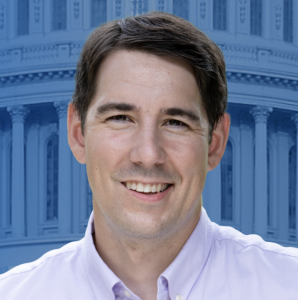
The latest Marist poll shows Democratic state Rep. Josh Turek and leading Republican U.S. Rep. Ashley Hinson among registered voters, 50% to 42%. The same statewide survey found Rob Sand, Iowa’s Democratic state auditor, with an even larger advantage over Republican Zach Lahn, 54% to 42%. Most other recent polling in the state has shown both races as much closer contests.
Nevertheless, it is against this backdrop that Hinson took new steps to distance herself from the White House this week, insisting that she wants to see the war with Iran “brought to a successful and immediate end.” It’s a politically convenient move that is sharply at odds with the GOP congresswoman’s recent legislative record.
* With six weeks to go before Election Day, the mess surrounding Missouri’s congressional district map is still messy. Roll Call reported late Monday, “A federal appeals court on Monday reinstated a Republican-preferred congressional map for Missouri, setting up a likely third Supreme Court fight over the district lines for the Show-me State. The ruling from a three-judge panel of the U.S. Court of Appeals for the 8th Circuit found that, because the state used a map drawn by legislators in 2025 for the August primary, the state must use it for the November election.”
* George W. Bush has generally steered clear of the political arena, but the former president is poised to host a fundraiser in Dallas with outgoing Republican Sen. John Cornyn of Texas in support of six GOP Senate candidates in battleground states. Texas Attorney General Ken Paxton, however, was excluded from the list of beneficiaries.
* In Michigan’s closely watched U.S. Senate race, the latest Suffolk University poll in Michigan finds former Democratic state health official Abdul El-Sayed ahead of former Republican Rep. Mike Rogers, 47% to 40%.
* Amid recent chatter that Republicans might have to give up on North Carolina’s Senate race, Semafor reported that a key super PAC aligned with the party, Old North Action, had planned to invest $6.5 million in campaign ads in the state, but it recently decided to drop that ad buy. Recent polls have consistently shown former Democratic Gov. Roy Cooper leading former Republican National Committee Chair Michael Whatley.
* And speaking of the RNC, Whatley’s successor, incumbent RNC Chair Joe Grutens, told Fox Business on Tuesday morning, “This is not your grandparents’ Democrat [sic] Party. … They want to get rid of July 4.” For the record, I’m not aware of any Democratic officials or candidates who’ve endorsed the elimination of Independence Day.
The post Tuesday’s Campaign Round-Up, 9.22.26: Poll shows Turek leading Hinson in Iowa appeared first on MS NOW.
You can watch MSNBC online by subscribing to a streaming service that includes MSNBC, such as Hulu + Live TV, Sling, or Peacock.
Hulu + Live TV
Sling
Peacock
In a social media post Sunday, President Donald Trump announced a major update to the “triumphal arch” he intends to build in Washington. The president declared that the 250-foot structure will now also be a “top grade military complex” that launches drones and houses snipers on its roof. That’s quite a shift from previous design plans, which imagined the arch as a tourist attraction with visitors able to purchase tickets to a planned observation deck.
The surprise transformation of the proposed arch’s intended purpose is likely grounded less in military needs than in flailing legal stratagems. But combining a fixation on aesthetics with the threat of violence is nothing new for this president. Trump’s vision of a utopia has become inseparable from the tropes of dystopia as he works to transform America into a beautiful police state.
Combining a fixation on aesthetics with the threat of violence is nothing new for this president.
None of the agencies working on the arch have confirmed Trump’s claim that the change comes at “the strong request of the United States Military, and for National Security purposes.” The president’s assertion, however, closely resembles the administration’s arguments in ongoing lawsuits attempting to halt construction of a massive White House ballroom. It’s not hard to see Trump pre-emptively shifting the supposed necessity for the arch now to head off potential delays down the road.
If such a request from the Pentagon does exist, it will likely make its way into court filings in the coming days. A group of veterans filed a lawsuit in February hoping to halt the arch, which they said would “dishonor their military and foreign service and the legacy of their comrades and other veterans buried at Arlington National Cemetery.” The federal judge handling the case previously ordered the administration to give the court 14 days notice before any construction begins. In the meantime, the administration has charged ahead: Construction is planned to begin in November despite reservations from local officials.
Unsurprisingly, the president seems not to have considered how off-putting his announcement would sound. It’s bad enough that even the National Park Service admitted that the arch would detract from other Washington landmarks. Even worse are the optics of placing an arch classically meant to celebrate conquests between two monuments reflecting on the horrors of war. Turning one of the main routes for commuters and travelers from Virginia to enter Washington into a towering security checkpoint, where drones can be launched at a moment’s notice and snipers monitor entry below, feels like the kind of thing that would make citizens feel less safe.
But the Trump administration has happily melded violence and aesthetics as part of its governing ethos. The Ultimate Fighting Championship bout held on the White House lawn this summer was billed as a tribute to the nation’s founding and treated the hypermasculine violence on display as its own form of aspirational aesthetic. Two men pummeling in each other in a cage for entertainment and the glory of America perfectly encapsulates the shallow nationalism Trump has hoped to instill with his various vanity projects.
The “triumphal arch” decision likewise serves as a counterpart to the National Guard’s continuing deployment to Washington. One of several deployments launched nationwide last year, the occupation is the last one standing thanks to federal control of the city. While many of those surges were to help suppress protesters rallying against Trump’s immigration policies, the Washington deployment was launched to supposedly deal with a “crime emergency” in the capital as part of the “D.C. Safe and Beautiful Task Force.”
There’s little separating Trump’s aesthetic vision for the country from the brutality it’s meant to at some points help mask and at other times accentuate.
In the year since first arriving in the capital, National Guard members have been seen patrolling the city with very large guns, while also taking part in beautification projects and snow removal. Normalizing the presence of armed soldiers on the streets through trash cleanups and other public works feels like the tactic of an occupying force attempting to win the hearts and minds of the conquered. (One wonders if the “Star Wars” universe’s Galactic Empire ever deployed its Imperial Stormtroopers to plant flowers while also hunting down dissidents.)
In truth there’s little separating Trump’s aesthetic vision for the country from the brutality it’s meant to at some points help mask and at other times accentuate. The authoritarianism he’s wielded to muscle through his projects has made his arch and ballroom into monuments to the blunt application of power. It’s unsurprising then that Trump has failed to recognize the dissonance of placing snipers alongside a massive statue of an angel watching over the city he is attempting to make his own fiefdom.
The post Donald Trump dreams of a beautiful police state appeared first on MS NOW.
You can watch MSNBC online by subscribing to a streaming service that includes MSNBC, such as Hulu + Live TV, Sling, or Peacock.
Hulu + Live TV
Sling
Peacock
In the wake of spooky incidents of artificial intelligence agents defying their creators’ commands and rules, the great fear of the day is the prospect of rogue superintelligence that turns on humankind — and extinguishes it. But a recent incident in which the United States reportedly almost sparked a war with China based on false intelligence generated by AI reveals that there is a far more immediate threat to worry about: the fallibility of humans.
CNN, citing four sources familiar with the episode, reported that this spring a special operations command analyst put together an urgent intelligence report claiming that “a Chinese ship in the Middle East was transporting components of a nuclear weapons program.” The implications of the report pushed the U.S. to serious action — members of the U.S. military were “preparing to board the ship” and “military planes were in the air.” But at the last minute officials dug a little further into the report and found that a chatbot the analyst had used had “inaccurately identified the material the ship was carrying.” (U.S. Special Operations Command Pacific and the Pentagon did not respond to CNN’s request for comment.)
The U.S. was astonishingly close to a military confrontation with the world’s second most powerful country based on what appears to have been an AI hallucination. That we got so close to accidentally triggering a global war should drive home the point that the imminent threat surrounding AI isn’t some runaway malevolent superintelligent entity like Skynet from the “Terminator” franchise. It’s humans misusing AI.
CNN reported that “across the U.S. military and the intelligence community, officials are pushing to weave AI into nearly every facet of their work, from analyzing the huge volumes of raw intelligence the U.S. collects and selecting targets for strikes to more mundane applications like managing budgeting, logistics and supply chains.” AI is probably useful for some of these data crunching tasks. But at the same time, we know chatbots are entirely unreliable in their abilities to distinguish between things that are true and untrue, which is of course the entire point of the enterprise of gathering intelligence. The problem here was with how the military used AI and failed to check sources, not AI itself. (CNN reported that it’s unclear if the chatbot used was a commercial one or one internal to the military.)
AI isn’t being used to intelligently assist human effort, but rather cheaply substitute for it in tasks where it is inappropriate to do so.
In low-stakes scenarios, the inability of AI to reliably ascertain facts is mostly just a nuisance. For example, companies might decide that using chatbots to provide customer service to people seeking information on merchandise they bought from a website is worth the costs of some customers and workers receiving inaccurate information, because they work well enough most of the time while reducing costs. (My suspicion is, however, that the rising presence of shoddy AI in our daily lives is contributing to the rising negative sentiment surrounding it.)
But there are many scenarios in which the accuracy of information is paramount — and yet people are using AI with unwarranted trust in these scenarios anyway.
Journalism is about reporting the truth — and yet prominent journalists have used AI-hallucinated quotes. The law requires a careful reading of the law and appraisal of precedent, and yet due to AI, lawyers have cited hallucinated cases and judges have issued opinions using fake quotes and incorrect case outcomes. The purpose of education is to learn, yet both students and teachers are delegating the tasks of writing papers and grading them to AI. Perhaps my favorite recent example is that a new book intended to shed light on AI’s relationship with truth turned out to be filled with AI-fabricated quotes.
What we see in these examples are the ways AI isn’t being used to intelligently assist human effort, but rather cheaply substitute for it in tasks where it is inappropriate to do so. None of this is to say that defense analysts or journalists or students or lawyers should never use AI, but rather that they have to be disciplined and judicious about doing so.
One would think this is common sense, but a combination of naivete about new technology, sloth and pressure from the capitalist class to reduce labor costs seems to have pushed many of us over the edge into self-sabotage.
In the case of the reported near-clash with China, ultimately a human did help us get back on track. But CNN’s report suggests that we got far too close to a potential catastrophe than we should have, and that something was wrong in the chain of action.
Human agency is also at play when it comes to the superintelligence scenario. AI frontier labs are deliberately working on creating scenarios that make dangerously powerful and uncontrollable AI more potent. A humanity-wrecking super-intelligence isn’t an inevitability, but would be the product of human engineering — and hubris.
As AI becomes more and more advanced, and people are inclined to delegate more of their mental work to it, one wonders if we will slowly lose our remaining instinct for skepticism of our machines. I think of the Soviet duty officer, Stanislav Petrov, who in 1983 broke protocol when he declined to tell his superiors that early warning systems detected incoming missiles from the U.S. because his intuition told him that the system was malfunctioning. His experience told him that the apparent nature of the attack looked implausible and that other radars didn’t show evidence of an attack. And he was correct — there was a malfunction.
That judgment likely saved us from a global nuclear catastrophe. But what happens when humans train themselves to delegate their judgment to unfathomably powerful machines that have no such powers? I don’t think we want to find out.
The post A spooky near-confrontation with China shows the real danger of AI today appeared first on MS NOW.
You can watch MSNBC online by subscribing to a streaming service that includes MSNBC, such as Hulu + Live TV, Sling, or Peacock.
Hulu + Live TV
Sling
Peacock

Republicans are playing defense deep in their own territory as voter anger over price hikes puts more House and Senate seats in play in the midterms.
New rounds of big spending, visits from Trump administration officials and private conversations among top GOP officials overseeing the battle for control of Congress reveal a party rushing to shore up red seats and states President Donald Trump won handily in 2024.
In the House, the fight has expanded far outside the few-dozen seats considered the most competitive as Republicans start to unleash their massive warchest: Since Aug. 1, more than $110 million in ad bookings have gone toward Republican-held districts so red that Trump won them by double digits.
In the Senate, Republicans are racing to shore up Ohio GOP Sen. Jon Husted as the Midwest struggles under the weight of Trump’s tariffs and high diesel prices. Trump and Vice President JD Vance are both expected to travel to the state before the midterms to boost Husted, according to four people familiar with the matter who were granted anonymity to discuss not-yet-public plans.
GOP leaders are also trying to keep a handle on contests in Iowa and Kansas — and they’ve quietly begun deprioritizing Georgia and even North Carolina, which a growing number of Republicans are privately bracing for Democrats to flip.
“We need to stop the contagion,” said one senior GOP official, who, like others, was granted anonymity to speak candidly about the midterm landscape.
“The map is hilariously big right now,” said one national Republican pollster.
Since Aug. 1, nearly two-thirds of advertising funds in House races have been booked or spent in races with GOP incumbents, according to a POLITICO analysis of data from AdImpact, which tracks political advertising.
That includes nearly $18 million to embattled Rep. Max Miller in Ohio’s 7th District; $14.6 million to Texas’ 15th District where Monica De La Cruz faces a challenge from Tejano Singer Bobby Pulido; $9.6 million in Alaska where Rep. Nick Begich faces a challenge from independent Bill Hill; and millions more to other districts that Trump carried by double digits two years ago.
The GOP holds a massive cash advantage over Democrats — which, for now, means they can afford to spend more broadly. Republican groups are dividing up the spending deluge in the final weeks ahead of the midterms, with Trump’s MAGA Inc. affiliated super PAC spending heavily to shore up safer red seats and deter Democrats from pushing into those races.
“The voter enthusiasm [for Republican voters] is not where it needs to be but that’s where a money advantage can make a really big impact,” said Mark Bednar, a GOP strategist and former communications director for then-Speaker Kevin McCarthy.
Republicans have adjusted their Senate map expectations: They’re still bullish about Maine, Michigan and New Hampshire. They’re not as optimistic about North Carolina — which Trump won in 2024 — but they are hoping to force Democrats to spend more there.
Republicans are more concerned about Alaska and Texas. And their worries about Ohio have escalated amid soaring diesel prices and backlash to tariffs — challenges they’re also confronting in Texas, Iowa, Michigan and Kansas.
Already two battleground candidates have called for ends to the Iran war, pointing to the high prices: Iowa GOP Senate nominee Ashley Hinson, whose team has grown increasingly wary of the tight race and Michigan GOP Senate nominee Mike Rogers. Both Hinson and Rogers use top Trump pollster Tony Fabrizio to guide their campaigns.
The White House did not respond to a request for comment on Hinson’s and Rogers’ remarks.
Senior GOP operatives’ own internal polling shows Trump’s approval underwater in deep red states across the country. And an Iowa poll conducted last week by a Democratic-leaning pollster found Democrat Josh Turek with a one-point lead in the Senate race and Trump’s approval at 43 percent in the state he won by more than 13 percentage points in 2024, according to a copy of the poll obtained by POLITICO.
“As more races come online, it very clearly is a defensive map for Republicans across the country,” said a national GOP strategist working on multiple battleground races.
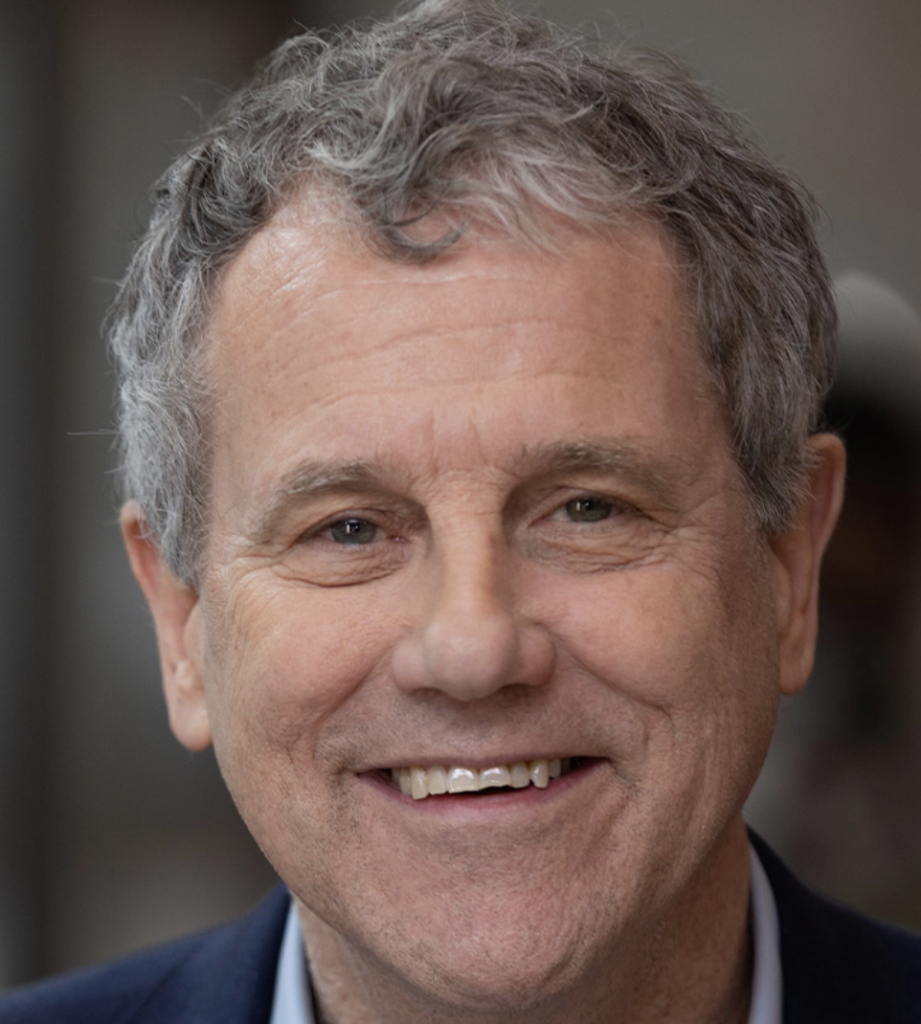
In Ohio, Republicans are optimistic that their attacks on former Democratic Sen. Sherrod Brown’s voting record are starting to break through, based on recent internal polling. But they’ve been conveying to outside groups for weeks that they need help reinforcing vulnerable incumbents like Husted. On Monday, the pro-crypto super PAC Fairshake said it planned to unleash $30 million against Brown, who was the top Democrat on the Banking Committee before losing reelection in 2024 — fueled in part by more than $40 million against him from Fairshake that year.
“The stakes go far beyond one Senate seat,” Amy Natoce, a Husted campaign spokesperson, said in a statement. “Control of the Senate will determine which agenda moves forward in Washington: Sherrod Brown’s out-of-touch socialist agenda, or Jon Husted’s agenda of lower taxes, a secure border, and an economy that rewards hard work.”
One Michigan Republican acknowledged the immense weight of the tariffs in races across the battleground state — including in the marquee Senate contest between Rogers and progressive Abdul El-Sayed, as well as across competitive House races.
“Everywhere we go, we are getting hammered on it,” the Michigan Republican said. “It’s crushing us.”

Even skeptical Republicans have been quietly checking in with their colleagues to see if the panic in redder territory is borne out in reality on the ground or just overblown polling. One GOP lawmaker who spoke to Hinson and her campaign team was somewhat surprised by their answers.
“It’s real,” that House Republican told POLITICO.
And POLITICO overheard a senior member of Kansas’ Republican party leadership complaining about their state’s tighter-than-expected race at the GOP’s midterm convention in Dallas earlier this month. GOP Sen. Roger Marshall, the person said, was in some trouble even as Republicans tried to dismiss the seriousness of his Democratic challenger, Adam Hamilton.
Trump and Vance, meanwhile, continue to travel to states they won by double digits in 2024 to stump for Republican candidates, as Trump-aligned super PACs hammer the airwaves in far more red territory than blue.
Recently-formed super PACs aligned with MAGA Inc. — Trump’s main spending vehicle that holds more than $400 million — have spent in 42 House districts so far, 30 defensive and 12 offensive. On average, they are spending in areas that voted for Trump by 7.9 points in 2024, according to a POLITICO analysis.
The PACs are even spending in some districts Trump carried by 15 points as a way to shore up Republicans and deter Democratic advances, according to Republicans involved in the conversations.
Major Republican super PACs, including the Trump aligned-super PACs and party-linked groups, have spent in more than two dozen GOP-held seats where Trump won by at least 5 points in 2024.
“Republicans aren’t taking anything for granted this cycle and will deploy whatever resources necessary to protect our majorities and prevent Democrats from taking control,” RNC spokesperson Natalie Baldassarre said in a statement.
The NRSC argued that “Democrats lack quality candidates and a clear path to victory,” so the party is “feigning optimism” and looking to candidates who have lost before, including Brown, “to somehow deliver [a] majority.” The NRCC said their opposition is “too broke to fight back.”
The geography of the Senate map still favors the GOP this cycle: Democrats have to defend all of their seats, while flipping four Republican-held ones, to take control of the upper chamber.
Republicans believe they have a real shot at flipping New Hampshire, and public polling shows Minnesota’s Senate race closer than expected, forcing Democrats to pay some minor attention to a state Kamala Harris won in 2024.
And Republicans are still hopeful that their mid-decade gerrymandering push could still give them a structural advantage as they fight to defend the House. Republicans won the redistricting war that erupted last summer and will likely net at least six seats from it.
But as economic concerns continue to dominate — with little relief in sight — Democrats are growing increasingly bullish.
“You know, I look at places like Kansas where I never thought we’d have a chance, or South Carolina or even Mississippi, these places are longshots, but they look like they’re competitive,” Sen. John Hickenlooper (D-Colo.) said.
For their part, senior Republicans have been working the problem from two ends, trying to gently persuade Trump in private conversations to back off some of his recent policy moves and wind down the war in Iran — while also organizing a wave of cash reinforcements across the growing map to try to stem the bleeding.
GOP lawmakers pressed Trump officials at their Dallas convention and since then to take emergency actions around fuel prices and refinery capacity. A band of House Republicans led an unsuccessful attempt to vote on a federal gas tax suspension until after Election Day. And, over the weekend, Sen. Chuck Grassley (R-Iowa) posted several direct appeals to Trump, asking why he hasn’t put an embargo on diesel exports.
But many are convinced the bleeding won’t stop until voters get some relief at the pump.
“The question is: How much longer can we go?” one senior House Republican said.
A federal judge on Monday dismissed a defamation lawsuit brought by Stefan Passantino, a former lawyer for onetime White House aide Cassidy Hutchinson, against MS NOW legal analyst and law professor Andrew Weissmann.
In a 15-page order, U.S. District Judge Loren AliKhan granted Weissmann’s motion for judgment on the pleadings in the case Passantino brought over based on a September 2023 social media post in which the legal analyst suggested Passantino “coached [Hutchinson] to lie” during her closed-door depositions before the House Jan. 6 committee.
AliKhan ruled that Passantino failed to show that Weissmann was negligent because Hutchinson’s testimony gave Weissmann reasonable grounds to say Passantino had “coached” her to lie.
The ruling effectively ends the lawsuit in federal district court.
Weissmann and a spokesperson for Passantino did not immediately respond to requests for comment from MS NOW on Monday.
Passantino, who served as a senior lawyer in the first Trump administration, represented Hutchinson during her first three closed-door interviews with the Jan. 6 committee. Hutchinson later changed attorneys and provided additional testimony to investigators about her interactions with Passantino. She became well-known after her testimony at a televised Jan. 6 committee hearing in June 2022.
Hutchinson told the committee that Passantino had never explicitly instructed her to lie and had told her not to lie. But she also testified that he advised her that saying she did not recall certain events was an acceptable response and that “the less you remember, the better.”
The Jan. 6 committee later said it had obtained evidence that a lawyer advised a witness she could claim not to remember facts she actually recalled. Multiple news organizations subsequently identified Passantino as that lawyer.
Weissmann, a former prosecutor on special counsel Robert Mueller’s team, wrote on X in September 2023 that another lawyer was Hutchinson’s “good lawyer,” adding in parentheses: “Not the one who coached her to lie.” Passantino sued days later, alleging Weissmann’s post “deeply damaged his 30-year reputation and caused him to lose significant business and income.”
The post Judge dismisses defamation suit Cassidy Hutchinson’s lawyer brought against MS NOW analyst appeared first on MS NOW.
You can watch MSNBC online by subscribing to a streaming service that includes MSNBC, such as Hulu + Live TV, Sling, or Peacock.
Hulu + Live TV
Sling
Peacock


ALL EYES ON GRACIE: Mayor Zohran Mamdani is expected to sit down with President Donald Trump at Gracie Mansion this afternoon, their third in-person meeting in less than a year and the latest wrinkle in one of the strangest relationships in American politics.
Since Mamdani’s first, shockingly cordial meeting with Trump at the White House last November, political observers have scratched their heads about the democratic socialist mayor playing nice with the Republican president despite their deep disagreements on … just about everything. Ostensibly, Mamdani is putting his personal distaste for Trump aside and betting it’s best for New York City to keep things cordial so as to avoid drawing the president’s ire.
But as resistance to Trump remains animating for Democrats nationally ahead of November’s midterms, Mamdani’s strategy for engaging with him stands out.
Earlier today, Gov. Kathy Hochul made clear that she, for one, has no plans to meet with Trump while he’s in New York. “I speak to him on the phone whenever I need to,” she told reporters in Manhattan.
Hochul, who’s facing reelection in November and tends to directly criticize Trump more frequently than Mamdani, said it was her understanding that the mayor agreed to host the president at Gracie Mansion during a previous conversation at the White House.
“The mayor and [Trump] said that when he’s back in town again, he would go to Gracie Mansion,” the governor said. “I don’t have a Gracie Mansion to invite him to.”
Still, Hochul said there’s an opportunity for Mamdani to use the Gracie confab to push Trump on releasing federal funding for New York, including for law enforcement, that she said the president’s administration has been withholding.
“We have to continue fighting for what New York needs,” she said.
Mamdani’s office wouldn’t say who requested today’s meeting or share specifics about the expected focus in advance, only saying the mayor will talk to Trump about “issues affecting New York City.” A Mamdani spokesperson said the mayor will elaborate on what was discussed at a post-meeting press conference that Trump isn’t expected to attend.
After the appointment at Gracie, Trump is slated to meet with French President Emmanuel Macron before headlining a couple Republican fundraisers. By contrast, after his Trump tête-à-tête, Mamdani will have dinner with Vermont Sen. Bernie Sanders, who’s in the city to headline a United Nations Charter event this evening that will also feature pro-Palestinian activist Mahmoud Khalil, a person familiar with the plans who was granted anonymity to discuss them told Playbook.
The Queens-born Trump is in town ahead of his Tuesday address to the United Nations General Assembly.
Maintaining a relationship with Trump isn’t without risk for Mamdani.
As Trump remains deeply unpopular amid the war in Iran and other controversies, some Democrats are privately questioning why the mayor sees a need to keep interacting with the president. But so far, Mamdani hasn’t faced any significant pushback from his hard-left base over his engagements with Trump, with leaders of the local chapter of the Democratic Socialists of America largely viewing it as the mayor acting in the city’s best interests. — Chris Sommerfeldt and Madison Fernandez

EYES ON AI: Hochul floated requiring safeguards like an artificial intelligence “kill switch” as part of state-level interventions to address the rapidly evolving technology.
During a Monday event in Manhattan rolling out next steps for enacting the RAISE Act, New York’s landmark AI safety law that is set to go into effect in January, the governor said she’ll “look closely at additional ways to build on” the legislation — including AI kill switches “if they’re deemed feasible and in the best interest of our state.”
The governor in recent days has vowed to take additional AI-related actions beyond the RAISE Act, but has not specified what that might look like. Her suggestion of a kill switch comes days after California Gov. Gavin Newsom issued an executive order to explore such a requirement for AI companies’ most-advanced models.
Some in the tech industry have argued implementing one is not technically feasible. Federal legislation to enact a kill switch requirement is currently stalled in Congress.
When asked to expand on the prospect of requiring a kill switch, Hochul said that “all options are on the table,” but wasn’t making a commitment.
“We’re going to do the research and make the decisions that are thoughtful to protect New Yorkers,” she said. “We’ll go as far as we need to to protect people of this state and ultimately this country in the absence of other leadership.”
Read more from Madison Fernandez in POLITICO Pro.
MORE BLAKEMAN MONEY: Billionaire former casino developer Steve Wynn has donated $1 million to the main super PAC supporting Republican Bruce Blakeman’s gubernatorial bid, records filed with the state Board of Elections this morning show.
The committee, Strong and Safe New York, has now raised $5.3 million since July.
Wynn has been a top donor to national Republican causes for over a decade. His most recent large donations in New York came last year, when he gave $361,000 to the state GOP and $500,000 to a super PAC boosting Andrew Cuomo’s mayoral bid. — Bill Mahoney

ENDORSEMENT CORNER: Rep. Jared Golden (D-Maine) endorsed GOP Rep. Mike Lawler in his reelection campaign in suburban New York, Golden wrote in an opinion article published Monday.
Lawler is facing a tough reelection campaign against Democrat Cait Conley in one of the biggest House battlegrounds this November. The lawmakers have previously collaborated to advance the Northeast Lobsterman Protection Act, and are both members of the centrist Problem Solvers Caucus.
Golden, who is not running for reelection, was one of two House Democrats to break with the party and twice vote in favor of the Republican legislative agenda earlier in September.
“Mike Lawler has been a true partner to me and a friend to fishing families he will never represent,” Golden wrote. “I strongly back him, and I hope voters send him back to work. Wherever you live, find the members who pass laws with the other party, and keep them.”
House Minority Leader Hakeem Jeffries called the cross-aisle endorsement a “smoke and mirrors ploy” that “will do nothing to change the outcome of the race.”
“In desperation, [Lawler] is peddling an 11th hour endorsement from a retiring Congressmember who represents an out of town district more than 400 miles away,” Jeffries said in a statement. “Mike Lawler is an unadulterated phony who has never shown bipartisan courage when it matters.”
Read more from POLITICO’s Elleiana Green.
ON THE AIRWAVES: With fewer than 50 days to go before Election Day, House Democrats’ main super PAC is making its first TV ad buy in support of Conley on Monday.
The House Majority PAC said it is reserving $1.2 million on cable in the Hudson Valley contest. (An additional $1.2 million is going toward fighting Republican Rep. Tom Kean Jr.’s re-election in New Jersey, which is also covered by the New York City media market.) HMP said earlier this year that it didn’t include the high-dollar NYC media market in its initial reservations because it was “prioritiz[ing] markets where rates increase significantly.”
Republicans have been largely outpacing Democrats in NY-17 on the ad spending front, thanks to significant buys from super PACs backed by the president and House leadership. From the beginning of September through Election Day, the GOP has placed $15 million on ads across broadcast, cable, CTV and digital platforms, according to ad tracker AdImpact.
The new HMP spend is the biggest from an outside Democratic group so far, but still leaves a large gap between the parties. Democrats have placed around $3 million on advertising in the period between September and Election Day, with the largest chunk coming from the Conley campaign. — Madison Fernandez
IN OTHER NEWS:
— JUDGES CASH IN: Brooklyn Democratic Party leaders have raked in $190,000 in contributions from judges and judicial candidates since 2012, raising some ethical and legal concerns. (New York Post)
— AFFORDABILITY AHEAD: Anthony Shorris, the mayor’s new pick for the president of the New York City Economic Development Corporation, laid out a vision for solving the city’s affordability crisis that goes beyond Mamdani’s vision for five city-owned grocery stores. (The New York Times)
— BUY NOW, PAY LATER: The Mamdani administration is pushing Albany for tougher ‘buy now, pay later’ regulation, as many New Yorkers use the plans to pay for basic essentials, sinking deeper into debt. (amNY)
Missed this morning’s New York Playbook? We forgive you. Read it here.
CHICAGO — Illinois Gov. JB Pritzker revealed Monday that he was diagnosed with Type 2 diabetes two years ago and began taking a GLP-1 medication, resulting in an 80-pound weight loss that he says has transformed his health and daily life.
The disclosure marks the first time the Democrat has publicly disclosed that he has diabetes, as well as officially acknowledging that he is on GLP-1 medication, which is prescribed both for diabetes treatment and weight loss. The governor told CBS News he started taking the medication after doctors warned that he would likely need insulin for the rest of his life.
Pritzker is viewed as a likely 2028 presidential candidate and has spent two years batting away questions about his visibly slimmer appearance, though he did hint at his weight loss during the Gridiron Club and Foundation’s annual white-tie dinner in Washington, D.C., earlier this year.
“I’m JB Pritzker, governor of the great state of Illinois, and if you’re seeing me in person for the very first time, yes, I’m the guy who put ‘gov’ in ‘Wegovy,’” he told the high-profile crowd.
The 61-year-old governor said he has struggled with his weight since childhood, dating back to when he was a 7-year-old. That’s about the time his father, Donald Pritzker, suffered a fatal heart attack at age 39 while playing tennis.
President Donald Trump has made Pritzker’s weight an issue, often commenting about it in personal attacks. Asked about his weight loss during an interview with POLITICO in the spring of 2025, Pritzker said, “How about, just for health.”
In Monday’s CBS interview, the governor said he closely monitored his cholesterol, triglycerides and other health markers for years because of his family history. But after becoming governor, he acknowledged the stress of leading the nation’s sixth-largest state contributed to additional weight gain.
Two years ago, that concern became more urgent when doctors diagnosed him with Type 2 diabetes, he told CBS. “My doctor said, ‘Oh no, you’ll never come off of it. You’re going to have to do this the rest of your life, and I recommend that you take a GLP-1,’” Pritzker recalled about being told he’d have to take insulin.
His wife, MK Pritzker, encouraged her husband to proceed on GLP-1. “I want him to be around for a really long time,” she told CBS.
The governor’s office confirmed that as a result of the GLP-1, plus improved diet and exercise, Pritzker “is no longer on insulin and down to levels that indicate no diabetes/prediabetic levels.”
Pritzker said the effects were almost immediate. Within days, he said, he didn’t feel the appetite urges. “It was the strangest feeling.”
The governor also has gained local attention for taking walks along the Lake Michigan walking path in Chicago. Along with adopting the healthy habit, it’s allowed him to talk regularly to constituents.
During Monday’s interview, Pritzker side-stepped questions about whether he was running for president. “I honestly am focused on what’s best for the people of Illinois,” he said.
The governor also talked about being proud of Illinois’ decision to cover GLP-1 medications for people with diabetes, becoming emotional describing a woman who approached him and told him access to the medication had saved her life.
The announcement about his weight comes as Pritzker is taking a more prominent role in the 2026 midterms, chairing a political action committee focused on investing at least $20 million in Democratic House races. The move has added to speculation about a potential presidential bid, where the demands of a national campaign would put his health and stamina in sharper focus.
Voters are perfectly fine supporting candidates who aren’t white men.
But they do show small preferences for candidates who are younger and Christian, according to new results from The POLITICO Poll. And voters were most likely to penalize transgender candidates in hypothetical matchups, though Democrats were more likely to support them than GOP voters were.
The results cast a new light on a simmering, yearslong public conversation within both parties about what it means to be electable and whether putting forward candidates of varying backgrounds is too politically risky in a close election environment. It’s a debate that defined the last open Democratic presidential primary in 2020 and is poised to play a role in 2028 too.
Democrats have largely focused their debates on whether voters would accept a person of color or a woman, particularly after President Donald Trump defeated Hillary Clinton in 2016 and Kamala Harris in 2024 — while losing to Joe Biden in 2020. But the poll results suggest the characteristics voters care most about are different, shaped by frustrations over aging politicians and both new and old culture wars.
“The American people, I believe, think about identity way less than the average political consultant does,” said Mike Nellis, a longtime Democratic digital strategist who advised Harris’ 2020 presidential campaign. “Obviously there are factors in society that make it harder for women and people of color to get elected, but there are plenty of incredibly talented people out there who are capable of getting over the hump on that.”
To test whether demographic characteristics make a candidate more or less electable, POLITICO’s polling partner, Public First, showed thousands of respondents a series of head-to-head matchups. In each case, respondents were given basic information about the candidate’s demographics, such as their race, age and gender; their career, with titles such as doctor, attorney general or CEO; and a single-sentence description of their political alignment, either as a progressive or moderate Democratic, independent, or moderate or MAGA Republican.
Respondents then picked which candidate they would prefer, and the results overwhelmingly showed voters cared the most about a candidate’s political ideology. But respondents also revealed more subtle patterns in their preferences.
Voters across both parties were more likely to reject older candidates in favor of younger ones. Republicans in particular favored candidates who were described as Christian or regular churchgoers, even when controlling for the candidates’ politics. GOP respondents picked candidates described as regularly attending a church just under 9% more often than candidates who did not have any faith.
That means that even though Republican respondents usually picked the GOP candidate in head-to-head matchups, for example, they were more likely to cross over and support an independent or Democratic candidate when that candidate was described as Christian.
The results on sexual orientation were more complicated: When candidates were described as “gay,” they were picked about 10% less often across all voters. But when the candidate descriptions describe the candidate as a man married to his husband — without a label for sexual orientation — respondents did not pick them less often in a statistically significant manner.
Voters were less likely to pick transgender candidates, with Democratic voters about 5% less likely while GOP voters were 17% less likely, all else held equal.
The age results were a strong signal that voters want a new generation of candidates after the last presidential cycle was driven by concerns about Biden’s age, fueling a slew of intergenerational primary contests this year and leading major Democratic voices to publicly call for a younger candidate for 2028. Trump is now 80, and Republicans have faced their own conversations about aging politicians, as Sen. Mitch McConnell (R-Ky.) faced serious health challenges earlier this year.
Amanda Litman, co-founder of Run For Something, which recruits candidates under the age of 40, said when the group started its work nearly a decade ago, younger people were often seen as “risky bets” electorally.
“Now I think people are starting to see that that is not true. Voters will judge people one by one,” Litman said. “They’re also really hungry for change and really hungry for someone who didn’t get us into this mess.”
The poll found candidates over the age of 70 were nearly 10% less likely to be picked than candidates under the age of 50, with Democrats slightly more likely than Republicans to disfavor a candidate due to age.
Notably, The POLITICO Poll didn’t find differences based on a candidate’s race or gender overall, outside of gender identity. That has long been a topic of debate among Democrats thinking about winning the presidency.
When Harris replaced Biden on the top of Democrats’ ticket in 2024, few questioned that she would choose a white man as her running mate. Since her loss, some Democrats have argued that a white male candidate might be the best path forward for the party in 2028.
Harris also wrote in her memoir about the campaign that she thought picking former Transportation Secretary Pete Buttigieg as her running mate would have been “too risky” because he is gay, and that he otherwise would have been her ideal partner.
But Buttigieg, who is contemplating running for president in 2028, recently argued that the country is ready for a gay president, saying he wouldn’t have launched a bid in 2020 otherwise.
“What’s on people’s minds isn’t about you, your identity as a candidate,” he told NBC News last weekend. “It’s about them. It’s about their lives.”